Strength Training for Bone Density: How Lifting Weights Protects Your Bones
If your mum or grandmother have ended up with a diagnosis of osteoporosis, you've probably had that quiet moment of wondering: is that where I'm heading too?
Strength training is unique compared to other types of physical activity in that it is proven to stop and even reverse bone mineral density loss. Bone isn't a fixed structure that simply wears out and responds very well to demand. One of the most powerful demands you can place on it is lifting progressively heavier weights.
A few of my London clients have a history of osteoporosis in their family. If you worry about loss of bone mineral density, particularly approaching or post-menopause, I will cover a few pointers on why strength training could be one of the best tools to have in your arsenal to protect you from falls & fractures as you age.
Why bone density should be on your radar earlier than you think
Bone density peaks in your late twenties to early thirties. After that, it declines gradually. For women, the decline accelerates sharply around menopause as oestrogen drops. Oestrogen helps regulate cells that break down bone, so when it falls, bone loss speeds up.
Bone mineral density loss becomes a problem and can be caught early with a DEXA scan showing osteopenia, or bone density that's lower than normal for your age, but not yet at the level of a diagnosis of osteoporosis. Osteopenia is usually symptomless, and it's precisely the stage where strength training makes the biggest difference.
What you do in your thirties, forties and fifties can genuinely change that trajectory and avoid the worst outcomes of bone density loss.
Can you actually improve bone density as an adult?
To put it simply: yes. The benefits of strength training on increasing bone mineral density is one of the topics with the most clear-cut findings in the research.
Bone adapts to the loads placed upon it. When you lift something heavy, your muscles pull on your bones and gravity compresses them. Bone cells sense that mechanical stress and respond by laying down new bone tissue, making the structure denser and stronger.
If you don’t provide this stimulus to the bone (e.g. because of sedentary living), your bone loss will accelerate. Crucially, bone responds best to loads that are heavy. The 1kg dumbbells are likely not enough to provide you with the intensity you need to stimulate bone tissue production in a meaningful way.
The LIFTMOR study
The most influential study in this area is the LIFTMOR randomised controlled trial (Watson et al, 2017), published in the Journal of Bone and Mineral Research.
Researchers recruited 101 postmenopausal women with low bone mass with an average age of 65 and randomly assigned them to one of two groups for eight months. One group did twice-weekly, 30-minute supervised sessions of high-intensity resistance and impact training: five sets of five repetitions of lifts like the deadlift, squat and overhead press at 80-85% of their one repetition maximum, plus impact work. The other group followed a gentle home-based exercise programme.
The results speak for themselves. The heavy-lifting group increased their lumbar spine bone mineral density by c.4% and their femoral neck bone mineral density by c.2%. By contrast, the low-intensity exercise group lost bone mineral density over the same period.
The heavy lifting group also improved on every measure of functional performance the researchers tested, on measures such as how quickly they could rise from a chair.
"My last tests showed a significant improvement in my bone density"
The research is one thing, but seeing it happen with a client is another. One of my own clients who has taken up strength training after an osteopenia diagnosis, worried about her bone health. After a few months of strength training with me, here's what she had to say:
“I’ve been training with Nicolina for some time now, and the results have been genuinely life-changing.
A few years ago, I had been diagnosed with osteopenia and was concerned about my bone health. Thanks to her strength classes, my last tests showed a significant improvement in my bone density. Not only do I feel stronger and more confident, but I also feel reassured knowing that I’m actively improving my long-term health.”
The best types of exercise for bone density
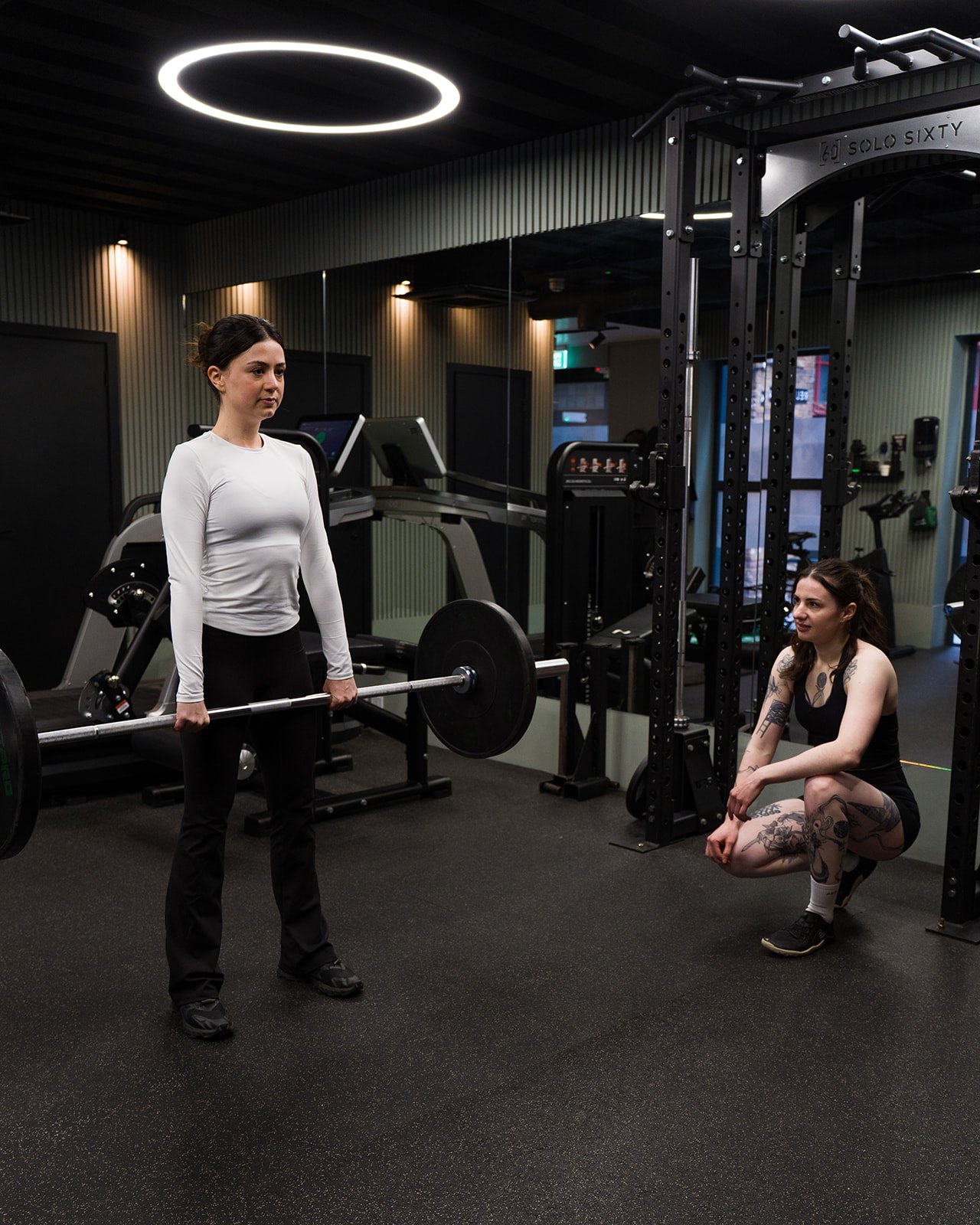
Not all types of exercise count equally here. Your bones respond to appropriate load and impact, which is why some very healthy forms of exercise do surprisingly little for bone. Running, yoga, pilates, classes where you train with low weights but lots of reps can be beneficial in their own right to help with aerobic capacity, stability, balance and coordination. But they won’t do much to help preserve muscle mass which naturally declines with age, as well as help you maintain or increase your bone mineral density.
What works well:
Compound strength exercises such as squats, deadlifts, lunges, overhead presses, rows. The key here is to perform them with a heavy enough weight to elicit the correct stimulus for your body.
Progressive overload and gradually increasing the weight over weeks and months, so your muscles and bones keep receiving a challenging enough stimulus as you get stronger.
Impact work such as hopping, skipping, jump variations, brisk stair work. Small, controlled impacts stimulate bone, and they can be scaled right down for beginners.
How heavy and how often?
If you're brand new to lifting, you’re not going to max out on your first session. You start by learning the movement patterns with lighter weights or just your bodyweight, and you build up over weeks and months.
The progression is the point: bone (and the connective tissue around it) adapts more slowly than muscle, so a patient ramp-up is both safer and more effective. I've written more about organising your weekly strength training sessions here: how many times per week should you lift weights?
Training with osteopenia
If a scan has already shown osteopenia, strength training isn't just still advisable, it's arguably one of the most important things you can do. However, a few sensible rules of thumb apply:
Check in with your GP first, especially if you you have any other health conditions or take medications. If needed, explicitly get clearance for exercise.
Technique before load. Learning how to perform exercises with correct technique will ensure you set the right habits from the start and will also allow you to safely progress as weights get heavier.
Don't avoid the gym out of fear. The instinct after any pain or diagnosis is often to become more cautious with exercise. But a physical activity programme that is adapted and personalised to your situation is one of the best things you can do for your long-term health.
It's never too early, and rarely too late
If you're in your thirties or forties with a family history of fragile bones, you're in the ideal window: you can bank strength and bone now, before menopause accelerates the decline. However, if done appropriately, strength training will be beneficial for you at any age.
And there's a bonus that goes far beyond the gym. The same training that protects your bones is the training that makes everyday life easier. The food shop in one trip. The suitcase into the overhead locker. Swinging your child in the air. Getting off the floor without thinking about it. Bone density is the invisible benefit but freedom and independence is the gift you give yourself in day-to-day life.
How I coach clients for bone health in London
I'm Nicolina, a personal trainer in Islington and Soho specialising in strength training. I work with anyone looking to incorporate strength training sustainably into their lives.
Sessions run at two private Personal Training studios, and every programme is built around your starting point, whether you've never touched a barbell or you're an avid gym goer who has hit a plateau. We start with working on technique technique, build gradually, and get you to genuinely challenging weights at a pace that is safe and sustainable.
If you'd like to train for the long term, for your bones, your strength and your future self, send me an enquiry or take a look at my plans and pricing.
Frequently asked questions
What is the best exercise for increasing bone density?
Progressive resistance training using weights that are an appropriate difficulty and challenge. Usually anywhere from 60-85% of your maximum capacity.
How much exercise do I need to improve bone density?
Two sessions per week will be a great starting point for the majority of individuals who want to train for bone density benefits and day-to-day tasks. If you have any additional performance goals, more sessions will give you more training time to work on them. However, consistency and progressively heavier loads matter most.
Is pilates enough to maintain bone density?
Pilates usually involves lighter weights repeated over a long period of time. While it is amazing at training the core and teaching stability and fluidity, it will rarely provide a strong enough stimulus to build bone, especially after doing it for a while and for larger muscle groups such as the ones in your legs. Adding one to two strength sessions per week to complement will make a significant difference.
How long does it take to improve bone density with weight training?
Bone adapts slowly. Measurable changes in bone mineral density typically take several months of consistent, progressive training. Strength and balance improvements come much sooner.
Is lifting weights safe if I have osteopenia?
For most people with osteopenia, yes. We have plenty research on supervised, progressive strength training in women with low bone mass with an excellent safety record. Good technique coaching and a gradual build-up are essential, and it's always advisable to check with your GP or specialist doctor, especially if you take medication.
