Strength training with a chronic illness: my story
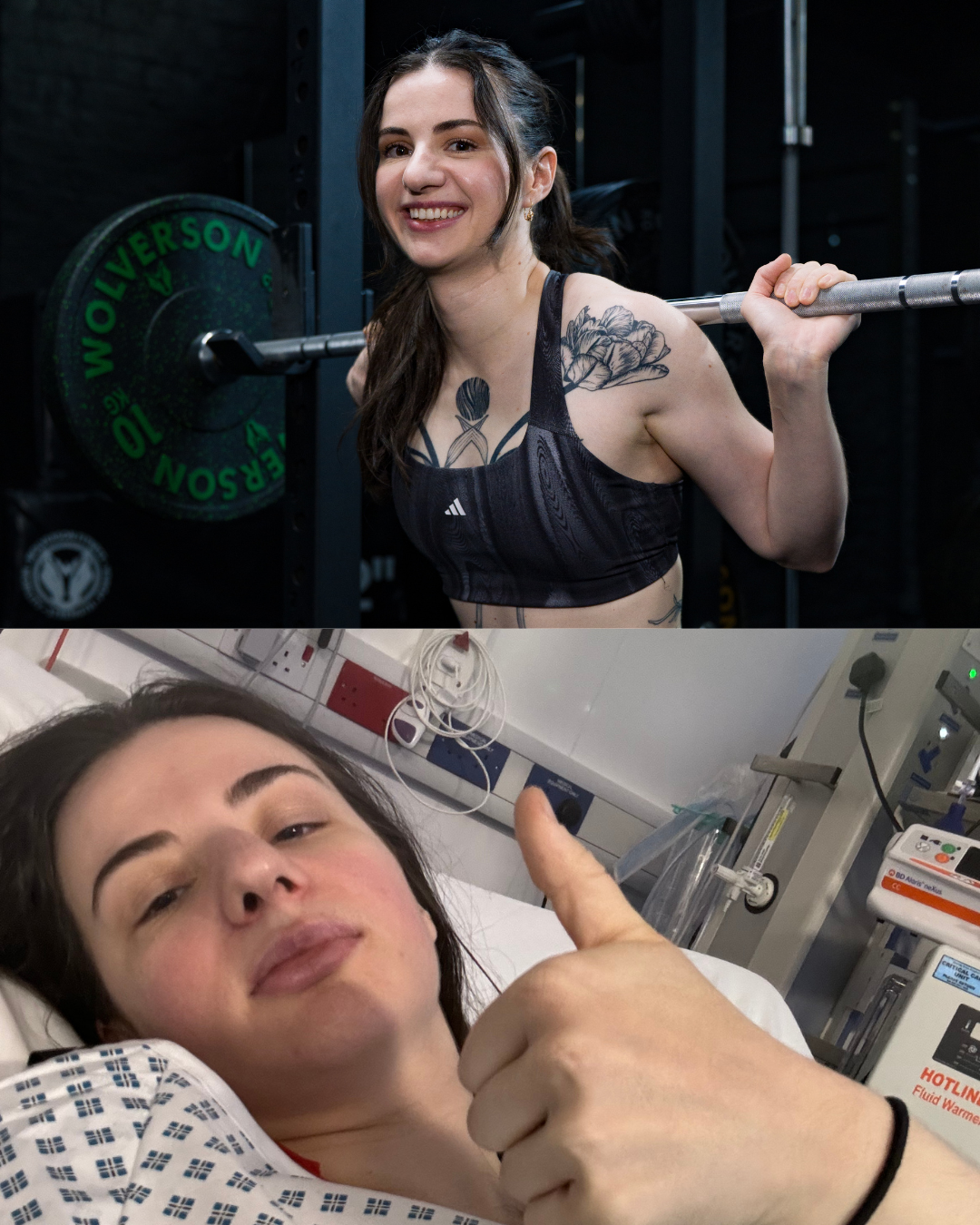
There's a version of me on the internet deadlifting 110kg. There's another version, from exactly 2 years before, lying in a hospital bed following a really bad flare up of my autoimmune condition.
I have ulcerative colitis, chronic pain from an accident I had as a teenager, and I'm autistic. I have been strength training on and off for close to a decade, and competed in my first powerlifting competition this year. Training with a chronic illness has been one of the biggest feats of discipline and consistency in my entire life.
If you're chronically ill, live with chronic pain and have fluctuating energy levels, most fitness advice won’t directly apply to you. It assumes a body that behaves the same way every Monday. The reality of a chronic illness is you can eat right, sleep right, rest right, and your body will still choose to throw spanners in the work.
But training, and strength training in particular, has been one of the best tools in my arsenal of managing my condition. Over time, I found that it has helped manage the chronic inflammation caused by my autoimmune condition.
I have also had periods of being on corticosteroids in the past, which are known to impact bone mineral density over time, so strength training also helps me counteract some of the effects of that. In this article, I will cover some strategies that I have arrived at through my own journey.
It’s very important, however, that you take your own situation into consideration. There is no one-size-fits-all and what works for me may not apply to you.
Consistency doesn't mean never skipping the gym
If there’s one thing I would like anyone to take away from reading this, it’s this. The “no days off” mentality is one of the most harmful attitudes to have in your fitness journey if you have a chronic illness. Not resting or being flexible with training will probably cause more harm than good in the long term. But I found that doing nothing and being scared of my body is not beneficial either.
When it comes to consistency in the gym, thinking long-term and focusing on the right habits is key. Someone who trains twice a week for eight months and takes three weeks off during a flare is far more consistent than someone who goes six times a week for a fortnight and then disappears.
Change is the only constant
When training with a chronic health condition, being flexible, adaptable, and iterating on what works is the most important skill to master. If you’re looking to build an exercise routine, here are a few things to consider:
Minimum Viable Session
This may be showing my background in tech, but it’s worth having a Minimum Viable Session in your back pocket to use on low energy days. Decide what your absolute activity level looks like, and make it genuinely small. It can simply be a walk or 30 minutes in the gym using light weights.
For me, I found that doing a light session instead of skipping movement altogether on low capacity days has made a huge difference to how I feel. I feel like I have still done something, I’m keeping my habit, and I have some semblance of normality and routine.
Train based on today’s capacity, not today’s plan
Rather than fixating on 3 sets of 10 reps with 20kg, adjust your volume and intensity based on what feels hard for your body on that specific day. Rather than working with a fixed weight or a fixed number of reps, it may be useful to work with the concept of “Reps in Reserve”. An exercise is challenging when you leave anywhere between 1-3 reps in reserve. An exercise taken to failure means you have 0 reps in reserve.
Instead of trying to hit a fixed number of reps on each of your set, focus on performing as many reps with your weight until you feel like you have 2-3 reps left in the tank.
Your body doesn’t know that last week you lifted 15kg and this week you’re doing 12kg. It can only sense how heavy or challenging an exercise is for you on the day. And what feels heavy will fluctuate over time based on your health situation, your sleep and many other variables.
Two sessions a week is a real programme
You do not need to be in the gym five times a week. For most people with a chronic illness, 2-3 sessions is the right starting point and often the right long-term answer, because it allows you to change your training days every week in response to how your body feels.
Two well-recovered sessions will be better than 0 sessions and will absolutely be better than beating yourself up for setting a target of 4 sessions/week and not being able to consistently hit it.
Ramp up more slowly than feels necessary
If your condition causes chronic inflammation, connective tissue issues, joint pain or fluctuating energy levels, your progress will likely take longer than regular gym goers. Don’t beat yourself up for not being able to increase the reps or weight on your exercises week on week.
Focus on the long game. Having to repeat the same weight for two weeks in a row and only then increasing is better than going too heavy too quick and risk a flare or an injury, which will then force you to take time out.
Track symptoms alongside your sets
Keeping a log of how you feel when you perform different types of activities can be a great way to figure out what types of exercises agree the best with your body. Even a simple record in your notes app will do. Alongside the exercises, weights and reps you did record how you felt going in, how you felt the next day and the day after, and any obvious symptom changes.
After a couple of months, you'll start to see if there’s any patterns emerging, how long your recovery actually takes, and whether a flare could be related to your training or not. Even if it is, it’s important to remember that the nature of a chronic illness means that you can do everything right and still experience symptoms.
It’s important to not blame yourself for a flare, but instead treating the gym and anything else you do as an exercise in iteration until you find a system that works for you.
What if you’re flaring?
If you are experiencing a more severe flare, resting and getting appropriate medical care is the most important thing to do. Most importantly, remembering that flares are temporary and you don’t have to do double the gym sessions to “make up” for lost time once you’re back. That's how you end up back at the beginning.
When you have more than one condition
If you have a chronic illness, it could be likely that you’re managing more than one health consideration, including mental health, neurodivergence, chronic pain etc. Interactions between the symptoms and equally the side effects of treatments for different health conditions can make it seem like you’re playing the game in in expert mode.
There's no one size fits all solution for this, but there is a useful rule of thumb: train around your most limiting condition this month, not your diagnosis on paper. The programme should be assembled from what you can actually do right now, and changed as and when your body needs it. Sometimes, you may go into the gym with one session in mind, but it may require changing on the spot if your body needs something different that day.
If gym anxiety is part of the picture too, I've written about some practical strategies around it here: Strength training for neurodivergent individuals.
What progress actually looks like
Your progress will not be an upward line that only continues to go up, and holding yourself up to this standard will likely only make you miserable.
A few things that can help to reframe how you think about progress are:
Looking at the trend over a broader period of time: months and years rather than weeks
Bouncing back faster following a flare
Day-to-day tasks becoming easier: walking a bit more, better balance, slightly better posture, anything else you notice not gym related!
Simply doing an activity that helps your brain
Some months you'll maintain rather than build. Holding onto your gym habit in whatever form through a difficult stretch is a real achievement, and it’s easy to not give yourself credit for it.
Finding the right fitness professional
I'm Nicolina, a personal trainer in Islington and Soho specialising in strength training for atypical gym goers. My chronic conditions as well as my own journey with neurodivergence has allowed me to develop a number of tools to implement ‘planned flexibility’ into training plans as well as changing and adapting as often as required.
My programmes come with flexibility built in from the start, exercises adaptations and modifications, and a PT who doesn't treat a cancelled session as a character flaw.
If that sounds like what's been missing, get in touch and tell me about your situation, what you've tried, and what's felt impossible so far. You can also take a look at my plans and pricing. Depending on your condition it’s very important that you check in with your doctor if you plan to drastically ramp up your activity levels and, if necessary, obtain pre-clearance for exercise.
Frequently asked questions
Is it safe to lift weights with a chronic illness?
For some conditions, yes. Strength training can be a good tool to reduce long-term inflammation in the body as well as build a foundation for making day-to-day activities easier. However, appropriate loads, good technique and a very gentle build-up are crucial. It’s always worth getting clearance from your GP or specialist doctor, particularly if you take medication.
Can I exercise with autoimmune conditions or chronic inflammation?
Exercise is usually safe during periods of remissions or low-severity flares. During an active flare, training should be reduced or paused, and your doctor or nurse should be part of that decision.
How often should I train if I have a chronic illness?
It’s very important to give yourself enough flexibility with your sessions and training days so you can train on good days and avoid the bad. Two sessions per week is a realistic and effective starting point for most people. It's enough to build strength and leaves room to recover.
Should I train during a flare?
During a severe flare, activity may not be possible. Getting your condition back to a more stable point should be your priority. Once your doctor has cleared you to return to exercise, it’s really important to gradually ease back in rather than picking up where you left off.
What if I can't go to the gym the same number of times each week?
Consistency across months is what counts, not a perfect week. A programme with a small "minimum viable session" for bad days will get you much better results over a year than an ambitious plan you abandon every time you're unwell.
Will exercise make my fatigue worse?
When performed appropriately, strength training can help manage fatigue over time. If chronic fatigue is a concern, talking to your GP and specialist doctor is key before making big changes to your lifestyle.
Do I need a personal trainer to train with a chronic illness?
No, but it removes a lot of guesswork. The hardest parts of training with a fluctuating condition are making changes on the fly and judging how hard to push on any given day. With a personal trainer, you can get your sessions adjusted and exercises substituted whenever you need it, and you can offload the mental load related to programme changes to a professional.
