Why strength training might be the best form of movement for dyspraxic adults
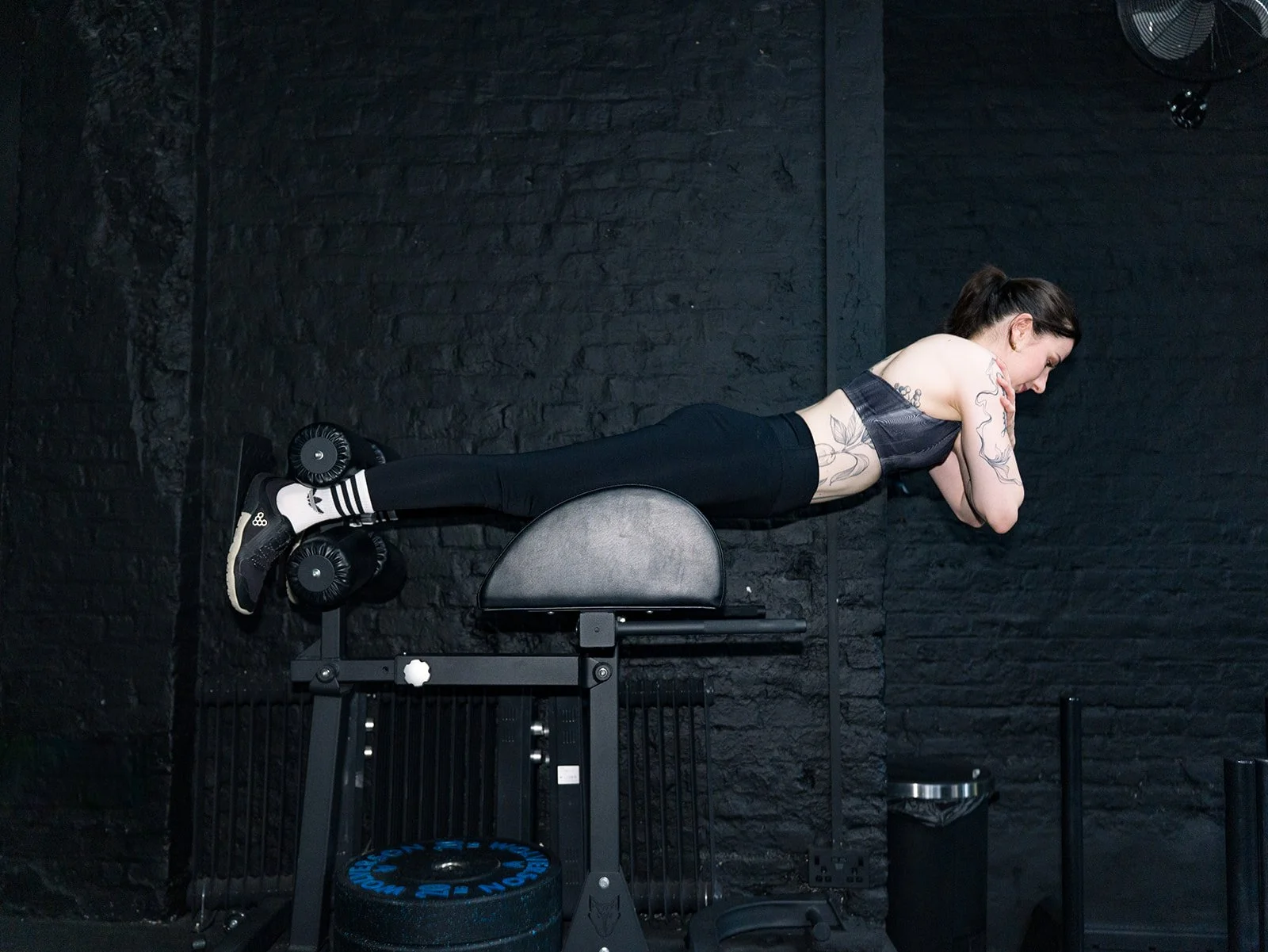
If you have dyspraxia, you have probably resigned yourself to believing you are "just not sporty". Maybe you struggle with balance, coordination, walking into objects, and fine motor skills.
Dyspraxia is a lesser-talked about type of neurodivergence, which affects motor skills, balance, and spatial awareness. It often overlaps with other conditions, such as ADHD, autism, or hypermobility.
It's not surprising that a lot of adults exhibiting dyspraxia symptoms could be tempted to avoid gym or sports altogether. When your brain struggles to coordinate movement or struggles to perceive the space your body occupies, gyms and exercises can feel difficult to master.
I want to make the case that strength training might actually be one of the most dyspraxia-friendly forms of exercise there is, and that with the right approach it can help with the exact things dyspraxia makes difficult: balance, coordination, body awareness and confidence in your own body.
Balance and coordination are things that can absolutely be trained, and it’s something I have worked on personally as well as with clients. While you may never move like a gazelle, performing controlled weight-bearing exercises can train your coordination and make tripping, falling and accidents less likely over time.
If you'd like a personal trainer in London who understands neurodivergence and will teach you every exercise from the ground up, please get in touch.
What dyspraxia actually affects in the gym
Dyspraxia, also known as developmental coordination disorder (DCD), affects how the brain plans and carries out movement. It often overlaps with ADHD, autism and hypermobility, so many of my clients are navigating more than one of these at once.
In a gym setting, it commonly shows up as:
Taking longer to learn a new movement and needing it demonstrating several times
Difficulty copying an exercise after watching someone demonstrate it
Feeling unsteady on one leg or losing balance when the weight shifts
Poor proprioception, i.e. not quite knowing what space your body occupies
Being left/right impaired or struggling with multiple instructions
Getting more tired after exercising as your brain is working overtime to concentrate on the movement
Bumping into equipment, dropping things, or feeling generally clumsy
No wonder why the gym can feel intimidating.
Why strength training suits a dyspraxic brain
When most people think about exercises, they think about performing lots of movements quickly or in a way that require a lot of coordination. A HIIT class, running or playing a sport all require you to process what's happening and respond in real time, which is exactly what dyspraxia makes hard.
Strength training is the opposite. Movements are slow, controlled and repeated in the same way every session. There is no ball coming towards you and nobody is getting you to perform movements for time. You do a squat, you rest, you do another squat. You have as long as you need to set up, and you can learn one exercise at a time until it becomes automatic.
Practicing and mastering movements is the whole point. Dyspraxic people can absolutely learn motor skills, it just tends to take more practice and more explicit teaching. Another major benefit of training for strength explicitly is that it requires you to deliberately think about your body and muscles you need to engage to perform various exercises.
Mind-muscle connection, especially on exercises that require balance such as lunges, will also help enormously with balance and proprioception. Unlike running or HIIT classes that require you to go through lots of movements quickly, performing a lunge can be just as challenging but allows you to perform it in your own time and start from a weight that is manageable, even if the starting point is your bodyweight.
Strength training allows you to get better at the exact things dyspraxia affects in a structured way with measurable progress. Exercises can be endlessly adapted and varied to work on your specific weak points too.
Benefits that go beyond the gym
Better balance and less accidents
Exercises like split squats, step ups and lunges build the muscles around your ankles, hips and trunk that keep you upright and explicitly train your balance. My clients with dyspraxia notice they feel steadier on stairs, and have better balance while performing day-to-day tasks.
Improved body awareness
Learning to feel which muscles are working, where your feet are pointing and explicitly thinking about the muscle targeted by a specific exercise builds proprioception over time. This mind-muscle connection is also incredibly beneficial if you also happen to be hypermobile too. Treating exercise as a form of mindfulness in this way could really help with being aware of your body over time.
Joint support if you are hypermobile
In addition to bad coordination, hypermobility is very common alongside dyspraxia. If you have hypermobile joints, strengthening the muscles, tendons and ligaments around it is one of the best things you can do to reduce pain and your fear of "going over" or dislocating a joint.
How to make strength training dyspraxia-friendly
While there's no single plan that works for every dyspraxic person, here are a few rules of thumb that may be beneficial if you are considering starting exercise.
Start with machines and stable positions
Free weights are great eventually, but they demand balance and coordination from the start. Machines take balance out of the equation so you can focus on learning the movement and building strength. Seated and lying exercises, or anything where you're holding onto something, are good starting points. If a bodyweight workout plans feels impossible right now, don’t feel like you’re not going to make any progress by starting with machines.
Learn fewer exercises, properly
A programme with 4 to 6 exercises per session for 2-3 sessions per week will take you much further than a different workout every session. Every new exercise is a new motor skill to learn, so the fewer you're juggling at once, the faster each one sticks. Group exercise classes are great but the nature of them means you are doing new movements all the time, so it doesn’t offer you as much opportunity to get good at movement patterns and really reap the benefits of getting stronger and more coordinated.
Break every movement down
If a demonstration goes past you, that's not a failing on your part. If you are already working with a personal trainer, don’t be scared to ask them to repeat a demonstration multiple times or giving you cues about specific body parts. Practising the movement with no weight at all, or holding onto something for balance, is a perfectly valid starting point.
Use cues that work for you
Some people respond to a visual demonstration, some need to be talked through it, and some need to physically feel a hand on the muscle that should be working. Words like "hinge at the hips" mean nothing unless you are able to translate it into how it should feel on your body. A good coach should go through different cues until you both arrive at what works best for you.
Actively focus on balance
When performing exercises, use different mental cues to help keep you balanced and more stable. Different things work for different people but finding a fixed point to look at while performing a movement and experimenting on whether looking at yourself in a mirror works or not are good places to start.
Track your workouts and how you feel
Write down what you did, what weight you used and how it felt. You don’t need to pay for an app if you don’t want to, a training log on the notes app on your phone is enough. When your brain tells you that you're "bad at this", your notes will tell you that you've added +10kg to your deadlift since spring.
A note on falls, drops and feeling clumsy
Ironically, the weight section in the gym is often portrayed as intimidating, yet it is one of the most inclusive ways to exercise. A bodyweight only home workout that requires you to get into challenging positions will be far less inclusive for someone with dyspraxia vs simple, straightforward exercises performed with machines and dumbbells.
You will probably knock into something, drop a dumbbell or wobble at some point. I have lost track of the number of falls and accidents I have had in different gyms myself, especially if I am training somewhere new and I am not fully familiar with the space.
Make sure you keep the area around you clear of bags, water bottles and other dumbbells and start with manageable weights so that if an accident happens, it’s no big deal. Do your exercises next to a wall or inside a rack so you can always have something to hold onto if you feel like you are losing your balance.
Looking for a dyspraxia-friendly personal trainer?
If you are looking for a personal trainer in London who is familiar with dyspraxia, neurodivergence and overlapping conditions like hypermobility, I offer coaching that starts from wherever you are. That might mean learning how to hold a dumbbell, stacking your joints correctly, building balance from seated positions, or simply having every exercise explained in language that works for your brain.
As someone who is autistic, has coordination issues, and lives with an autoimmune condition and chronic pain, I know that bodies don't always cooperate and that some days are better than others. My approach is built around sustainable habits rather than overnight transformations.
Get in touch and tell me about your goals, what you've tried before and what has felt difficult. We'll take it from there.
