Strength training for neurodivergent individuals
For many neurodivergent individuals, starting strength training is more than ‘just going to the gym’. It requires navigating overwhelm, sensory discomfort, executive function challenges and gym anxiety.
A lot of fitness advice focuses on an ‘all-in’ mentality that might feel like it’s posing an insurmountable challenge before you even start.
I am very familiar with how difficult it is to stick to a fitness routine, especially when navigating neurodivergence, chronic illness, job, family and life. Many of my clients are neurodivergent themselves as well and need personalised exercise cues and approaches to building routines and consistency.
If done right, strength training can be one of the best gifts you can give to yourself for your long-term health and wellbeing. And if you’re interested in working with a neurodivergent-friendly personal trainer, please get in touch.
Why strength training can work well for neurodivergent people
One of the biggest misconceptions is that you have to do insane workouts and go to the gym every day. As long as you train at 2+ times a week with simple exercises and progressions, you will be able to see noticeable improvements over time.
Strength training is particularly helpful if you are neurodivergent because it has predictable outcomes. You follow a plan. You repeat movements. You track progress. You see what is improving. There is less ambiguity than in many other forms of exercise, and that can make it easier to build trust in your own body as you go along.
Benefits of a good strength training programme
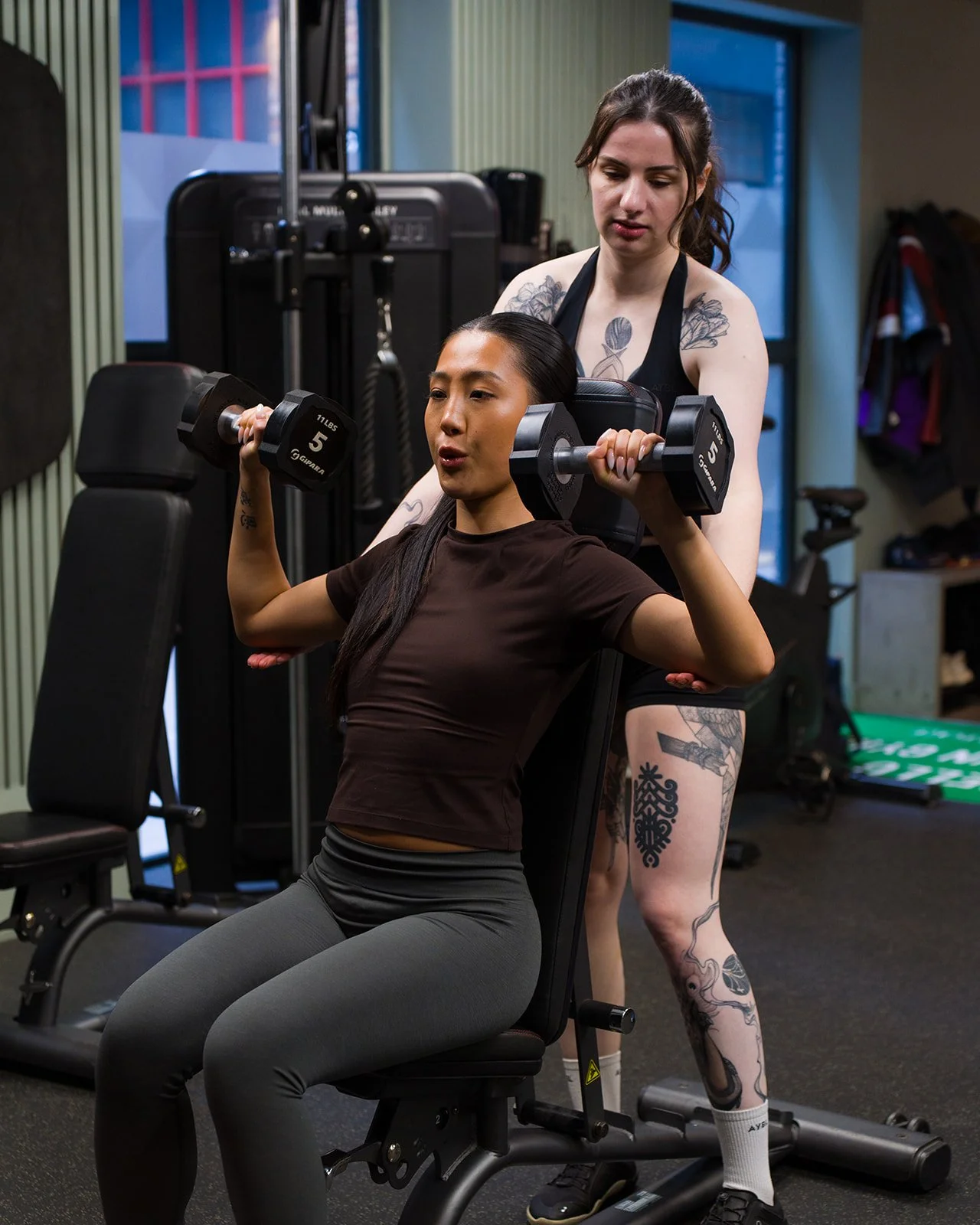
Creating structure
Many neurodivergent people do well with clear systems. Unlike bodyweight exercises where progressing over time can be a bit trickier, it’s very easy to progress the majority of typical gym exercises by simply picking a heavier set of dumbbells or performing one more rep next session.
Reducing decision fatigue
The mental load of guessing the exercise or finding a new random workout class for the week can oftentimes become overwhelming. Having a clear workout plan removes the overwhelm of planning what to do.
Building confidence
If you are neurodivergent, chances are you may also be navigating hypermobility, difficulties with balance and coordination, or ruminating thoughts that make it hard to stay in your body.
A structured strength training programme can work wonders to address these. Repeating movement patterns and learning how to engage various parts of your body to perform exercises correctly gives you more confidence in your body which goes beyond the gym.
Supporting long-term wellbeing
Strength training is not just about aesthetics. It can help you feel more capable in your body, more resilient and more grounded in daily life.
How to make strength training more neurodivergent-friendly
There is no single “neurodivergent workout plan” that works for everyone. But there are practical principles that tend to make training more manageable and sustainable.
Keep the plan simple
Simple programmes don’t look good on social media because they make for boring content. Proven basic exercises and simple progression frameworks are all you need. Most people will make progress training:
2 to 3 sessions per week
4 to 6 exercises per session
Simple exercises with clear guidance
Clear progression
Reduce the number of decisions
The more decisions a workout requires, the more friction it creates. The good thing is that you can also use your brain to your advantage. Once you create a routine that works for you, you’ll probably find it easy to stick to it, perhaps easier than people who aren’t neurodivergent!
This can be done by:
Training close to work or home, based on your preference
Go on similar days and times in the week, e.g. when you work from the office
Learn a little warm up routine you can perform on ‘auto pilot’
Wear sensory-friendly gym clothing and use noise-cancelling headphones
Ramp up gradually
If you’ve never worked out before, stepping foot in the free weights section of a gym is going to be intimidating.
At the same time, progress was never achieved by not learning to tolerate at least a little bit of discomfort. Rather than jumping into everything head-first, try and push yourself to achieve a little bit more each time you work out. For example:
Going during quieter gym hours
Getting the staff to give you a tour so you’re not wandering around aimlessly
Wearing noise-cancelling headphones
Working with a personal trainer that can put together a workout plan and coach you exercises
Shopping around for a gym where you like the “vibe of”
Eventually, you can work up your way to the final boss of gym interactions - asking someone else how many sets they have left on a machine you want to use!
You are allowed to not always be able to do something new, take breaks and work your way up to whatever feels comfortable.
Take fluctuations in energy and capacity as given
Many workout plans can feel very rigid and unforgiving when you don’t do the plan perfectly. But many neurodivergent people do not experience energy in a perfectly consistent way.
A good training plan should have enough structure to keep you progressing, but enough flexibility to adapt.
That might mean:
Doing a shorter session instead of skipping entirely
Lifting lighter weights or swapping exercises if you are ill or injured
Having a “minimum viable session” for low-capacity days
Track your progress and celebrate success
Tracking your workouts is crucial to ensure progress over time. You do not need to pay for a fancy app. If you don’t have access to a workout tracking app, a simple entry in the notes app on your phone will do. Track simple things like:
what exercises you did
what weight you used
how many reps you completed
how the session felt
What if you also have gym anxiety?
Gym anxiety is incredibly common for anyone, but especially women or neurodivergent individuals who may not see a lot of other people like them in the gym.
The good news is that strength training can start simple:
a few machines
a quiet gym corner
a basic dumbbell-only plan
one coached session per week
The more you go to the gym, the more you will realise that the vast majority of the people there are on their own journey. Most often, the biggest people in the gym are also the nicest and are there for their own enjoyment and love of exercise.
Looking for a neurodivergent-friendly trainer?

If you are looking for a personal trainer in London who understands neurodivergence, gym anxiety, or navigating other overlapping conditions, I offer personalised coaching designed to meet you where you are. This can be anything from training better balance to explaining exercises from ground zero in language that doesn’t leave any guesswork on the table.
As someone diagnosed with autism and living with an autoimmune condition and chronic pain, I understand that some days are better than others.
My habit-building approach is designed with sustainability in mind, rather than requiring you to change your life overnight, which more often than not ends in burnout. Get in touch and tell me about your goals, your current training experience, and what has felt difficult in the past.
Frequently Asked Questions
Is strength training good for neurodivergent individuals?
Yes, strength training can work very well for neurodivergent individuals because it provides structure, repeatability, and measurable progress. The key is making the routine realistic, sensory-aware, with strategies allowing for flexibility for good days and bad days.
What is the best workout routine for neurodivergent people?
There is no single best routine for everyone, but most people do well with a simple plan: 2 to 3 sessions per week, repeated exercises, clear progression, and exercises that help progress towards their specific goals.
How do I start strength training if I have autism or ADHD?
Start small. Choose a simple programme, reduce decision fatigue, train in a manageable environment, and focus on progress over perfection. Focus on adding one habit at a time until you build a routine that feels sustainable.
How do I start strength training if I have dyspraxia?
Choose a programme and exercise cue videos that break down exercises very clearly. Gradually incorporating exercises that challenge your balance over time, such as single leg exercises, can also work incredibly well at developing better coordination in real life.
Can strength training help with gym anxiety?
Absolutely. A structured training plan can make the gym feel less overwhelming because you know exactly what you are doing. You also get an incredible sense of achievement by conquering something that may have felt alien at first.
Do I need a personal trainer for neurodivergent-friendly strength training?
You can do a lot on your own. A personal trainer is not magic, but can remove a lot of uncertainty and guesswork, in addition to providing accountability. A good coach can simplify the process, adapt exercises, reduce overwhelm, and create a plan that works with your brain rather than against it.
